November 6, 2026
Winter brings picturesque snowfall, but freezing temperatures introduce serious threats to residential exterior systems. Subtle thermal imbalances and sub-freezing weather create severe hazards along eaves and drainage channels. Ice dams and frozen gutters represent aggressive structural threats that compromise underlayment, detach gutter channels, and direct moisture into living areas. Proactive exterior maintenance remains essential for avoiding premature decay. Understanding how winter stresses building envelopes and consulting an experienced residential roofer ensures your home remains watertight and secure throughout the coldest months.
Understanding the Mechanics of Ice Dam Formation
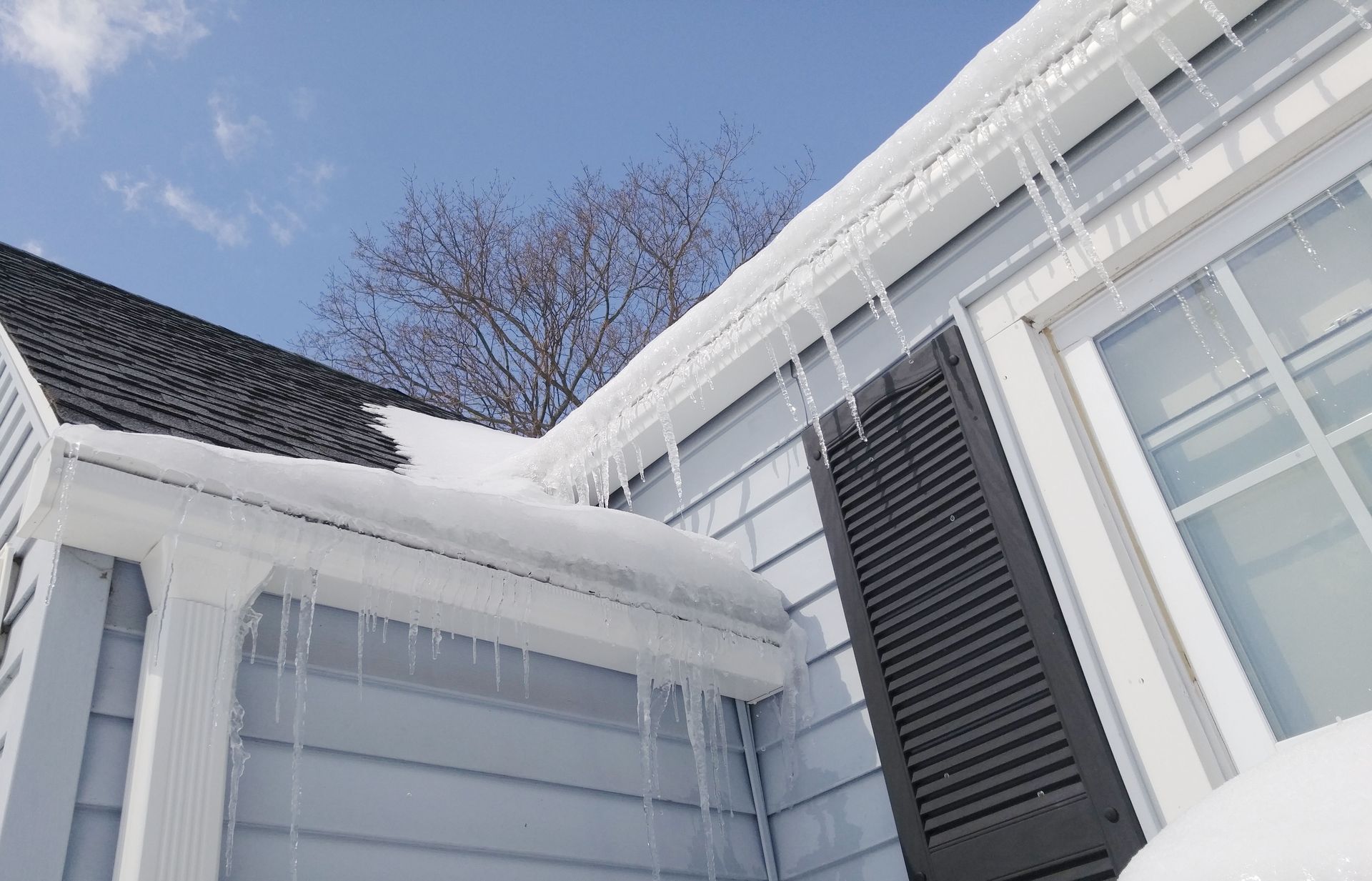
To prevent winter roof damage, homeowners must understand how ice dams form. An ice dam originates from warm air escaping living quarters into the attic. Inadequate thermal insulation, unsealed bypasses, and insufficient ventilation allow household heat to migrate upward, warming the roof decking. When upper portions of the deck rise above 32°F, resting snow melts.
Meltwater runs downward between snowpack and shingles until reaching cold eaves, overhangs, and gutters. Because these overhangs extend beyond heated living spaces, they remain at ambient sub-freezing temperatures. The runoff instantly refreezes, forming an expanding mound of solid ice along the edge. Over successive freeze-thaw cycles, this ridge blocks subsequent runoff from escaping down the slope.
Recognizing the Dangers of Moisture Infiltration and Structural Decay
Once an ice dam creates an impermeable barrier along the perimeter, newly melted snow has nowhere to drain. Trapped runoff forms a pool behind the ice barrier over lower roofing materials. Standard shingles, metal panels, and slate tiles rely on gravity to shed water downward; they are not engineered to resist hydrostatic pressure from standing water.
Deprived of an exit path, trapped water backs up under overlapping shingles. Moisture saturates felt underlayment and seeps into structural roof decking. Left unchecked, water penetrates walls and ceilings, soaking insulation and peeling paint. The resulting dampness creates an ideal breeding ground for mold while rotting structural rafters and soffits.
Managing the Risks of Gutter Backups and Weight Strain
Gutter systems play a critical role in the winter drainage equation. In late autumn, decaying leaves and twigs settle into horizontal gutter troughs. If not cleared before the first freeze, they create bottlenecks preventing melting snow from reaching downspouts.
When trapped water inside a clogged gutter freezes, it expands significantly, straining metal seams and mounting brackets. The physical load is staggering: a linear foot of ice weighs nearly sixty pounds. Multiplied across full gutter runs, this immense weight can pull gutters away from fascia boards and cause sections to collapse. Furthermore, frozen gutters accelerate ice dam growth by providing a solid platform for ridges to expand onto the shingle deck.
Evaluating the Financial Toll of Severe Winter Storm Damage
Many homeowners underestimate the destructive potential of winter weather until active leaks appear inside their living spaces. High winds, heavy snow loads, and deep freezing temperatures place continuous stress on exterior materials. According to RubyHome, storm damage accounts for approximately 33% of all annual roof replacements, underscoring how frequently severe seasonal weather cuts a roof's functional lifespan short.
Winter storms represent an especially potent subset of this threat. A single major freeze accompanied by ice dams can cause thousands of dollars in water remediation, ceiling replacement, and structural reframing. Enlisting a knowledgeable residential roofer to inspect and reinforce vulnerable roof sections prior to winter storms helps mitigate these hazards, protecting property values and household budgets.
Sealing Air Bypasses and Upgrading Attic Insulation
While clearing ice off eaves provides temporary relief, permanently eliminating ice dams requires correcting thermal inefficiencies within the building envelope. The primary goal is maintaining a "cold roof," where the outer deck matches the exterior ambient temperature.
Achieving uniform roof temperatures begins on the attic floor. Technicians must seal attic bypasses—including recessed light fixtures, plumbing vents, access hatches, and wiring penetrations—where warm indoor air leaks into unconditioned spaces. Once air leaks are sealed, blowing in sufficient insulation prevents radiant heat from rising into the attic void. A seasoned residential roofer can assess whether your current thermal boundary provides sufficient resistance to protect your roof deck from localized warm spots.
Balancing Ventilation Channels and Optimizing Attic Airflow
Insulation alone cannot keep an attic completely cool; balanced, continuous airflow is required to sweep away residual warm air and moisture. An effective attic ventilation system relies on balanced intake and exhaust mechanisms working in natural harmony:
- Soffit and Eave Intake Vents: Located along lower eaves, intake vents draw cold outdoor air into the attic. Baffles must be installed over wall plates to prevent loose insulation from blocking airflow.
- Ridge and Gable Exhaust Vents: Positioned along the peak of the roof, continuous ridge vents allow rising warm air to exhaust naturally out of the building.
- Sustained Thermal Equilibrium: By providing continuous airflow, this dynamic ventilation system keeps the roof deck cold, ensuring snow melts evenly under sunlight rather than prematurely from attic heat.
If an attic lacks adequate intake or exhaust volume, consulting a qualified residential roofer helps identify whether additional baffles, ridge vents, or gable fans are necessary to balance airflow before freezing temperatures arrive.
Implementing Preventative Safeguards and Protective Physical Upgrades
In addition to thermal upgrades, homeowners can employ practical physical safeguards to protect their property from winter weather damage:
- Late-Autumn Gutter Cleanouts: Clear all leaves and debris from gutter channels and downspouts before the ground freezes solid to guarantee clear drainage for winter meltwater.
- Ice and Water Shield Underlayment: When installing a new roof or replacing lower eave sections, a professional residential roofer installs a self-adhering, rubberized asphalt membrane extending at least two feet inward past the interior wall plane to create a watertight seal against standing water.
- Snow Rakes for Heavy Accumulations: Following substantial snowstorms, carefully pull fresh snow off the lower three to four feet of the roof edge using a long-handled snow rake to eliminate the fuel that feeds ice dams.
- Self-Regulating De-Icing Cables: In chronically shaded valleys or problematic architectural rooflines, installing regulated heat cables provides dedicated melt channels through eaves and downspouts.
Avoiding Damaging Shortcuts and Hazardous Removal Tactics
When an ice dam forms during winter, homeowners often panic and attempt aggressive removal techniques that do more harm than good. Never climb an icy ladder during freezing weather, and avoid hacking away at frozen ridges with axes, picks, or hammers. These sharp tools slice through brittle shingles, puncture underlying flashing, and crack roof decking.
Similarly, spreading rock salt or calcium chloride pellets directly across asphalt shingles strips away protective mineral granules, corrodes gutter aluminum, and kills nearby landscaping when runoff drains onto the lawn. If water backs up into your home, professional steam removal remains the safest, most effective remediation method. Low-pressure steam melts ice dams cleanly without damaging delicate shingle surfaces or tearing gutter brackets from the fascia.
Scheduling Comprehensive Assessments and Annual Roof Inspections
The most reliable strategy for avoiding winter roof failures is scheduling a comprehensive pre-season assessment with an experienced residential roofer. During an autumn inspection, technicians examine every component of your exterior defense system, from shingle adhesion and chimney flashing to soffit intake pathways and gutter slope alignment.
Catching cracked sealant, loose shingles, or disconnected downspout joints in dry weather prevents minor defects from escalating into disastrous winter leaks. Routine professional maintenance ensures that your home is structurally prepared to endure snowstorms, fluctuating temperatures, and heavy snow loads without structural compromise.
Winter weather presents aggressive challenges to homes, but ice dams and gutter backups are entirely preventable with the right maintenance strategy. By balancing attic insulation, ensuring adequate soffit-to-ridge ventilation, keeping gutters cleared of debris, and scheduling annual inspections with a trusted residential roofer, property owners can rest easy through the coldest storms. Protecting your roof envelope from moisture infiltration safeguards interior living spaces, preserves home energy efficiency, and prevents costly structural repairs. Contact Dr Roofer today to schedule your pre-winter roof and gutter inspection, and keep your home safe, warm, and leak-free all season long!